

Understanding and Tackling Ergonomic Risks in the Laboratory
If your laboratory teams are reporting shoulder discomfort, neck stiffness, or fatigue after routine tasks like pipetting or microscope work, it may signal underlying ergonomic risks in the laboratory. This article explores the root causes of these issues, highlights how strategic ergonomic investments can improve employee well-being and productivity, and outlines practical steps organizations can take to reduce injury risk and support a healthier workforce.
Why Are Laboratory Professionals Especially Vulnerable?

Laboratory work is more than just precise and patient, it’s physically demanding in subtle ways. Repeating the same motion over and over, holding static postures, reaching forward, gripping tools tightly, and bending your neck down for extended periods are all common, everyday movements in laboratories. These add up. According to OSHA, using equipment like microtomes, pipettes, biosafety cabinets, and microscopes can put serious strain on the hands, shoulders, neck, and back.
It’s not unusual for laboratory professionals to experience discomfort or even develop overuse injuries without realizing what’s causing it. The good news? Many of these risk factors can be tackled head-on through sound ergonomic principles, from the design of the workspace to daily work habits.
Simple Interventions That Make a Big Difference
Many ergonomic improvements can be categorized as either engineering controls, which change the physical environment, or administrative controls, which change the way work and habits are organized. Here are some practical strategies to help reduce strain and fatigue in the laboratory:
- Ergonomic Training: Training on best practices, proper posture, and biomechanical principles specific to laboratory work are invaluable, and best when paired with physical adjustments.
- Supportive Seating: Choose chairs designed to support the specific tasks performed. Sitting comfortably with good back support can prevent a cascade of postural problems.
- Raise The Work: When standing, raise benches or equipment like biosafety cabinets to reduce bending forward constantly.
- Adjustable Equipment: Biosafety cabinets or benches that are height-adjustable can fit a wide range of body types and help approximately 90 percent of the workforce get into a comfortable position.
- Arm Support: Arm support can help relieve pressure from the neck, shoulders and upper back.
- Electronic and Multi-channel Pipettes: These tools lessen the thumb force and repetitive motions, that contribute to hand and finger fatigue.
- Anti-fatigue Matting: Cushioned mats can aid those on their feet for extended periods to reduce leg and back fatigue.
- Properly Sized Tools and Gloves: The right size of gloves and tools can significantly help prevent extra strain and increase precision.
What Happens When We Take Ergonomic Risks in the Laboratory Seriously?
It’s one thing to know about ergonomics, and another to see tangible results from applying it. Research consistently shows that while training in ergonomics is helpful, it may not solve problems if companies only rely on that approach.
According to the CDC / NIOSH modifying the workspace (engineering controls) can have a significant payoff, followed by changes in how we schedule work and take breaks (administrative controls). And ergonomic training helps educate workers in healthy productive work habits.
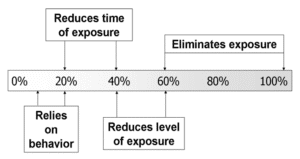
For an example of engineering controls, if ergonomic design can eliminate most of the heavy lifting in your laboratory, you might see lifting-related injuries drop by up to 80–90%. In contrast, relying solely on “safe lifting” training usually only reduces injuries by about 10–20%. That’s not to say training isn’t important, it definitely is, but it works best as part of an overall strategy.
Investing in Ergonomics: A Smarter, Safer, More Productive Approach

Your laboratories are spaces of discovery and innovation, but they shouldn’t come at the expense of your workers’ health. Ergonomic design and mindful work habits promote productivity and health, and can make for safer, more comfortable environments. So next time you’re setting up a workstation or ordering tools, think ergonomically, it’s a small change that can profoundly impact how your workers feel during and after work.
Check out our training and assessment options to increase productivity in laboratory settings. By adopting changes in work practices, laboratory design, and equipment purchasing, you reduce ergonomic risk factors; because everyone deserves a comfortable place to make breakthroughs.
Contact us to reduce injury risk, improve workplace comfort, and support your laboratory team’s long-term success!
