
Active Seating: What Actually Improves Posture and Comfort
“Active seating” is the latest rage, in the quest for better posture, more comfort and healthier work habits. Treadmill desks, balance balls, and kneeling chairs are among the alternatives that promise to change the way we sit, and feel, at work.
But here’s the reality: a standard adjustable task chair is typically the best fit and most comfortable. And no chair or seating solution, no matter how innovative, can replace the need for movement.
Many of these tools do have legitimate benefits, but some perceived benefits can be misleading. The result? Discomfort, fatigue, the potential for injury, and sometimes even worse posture than you had before. Now is the time to reevaluate not only what you sit on but also how you move during the day.
Related Blog: How to Fix the Most Common Work From Home Aches and Pains
Let’s break down some of the most common active seating options, and the myths surrounding them.
Treadmill Desks: Good in Moderation, Not All Day
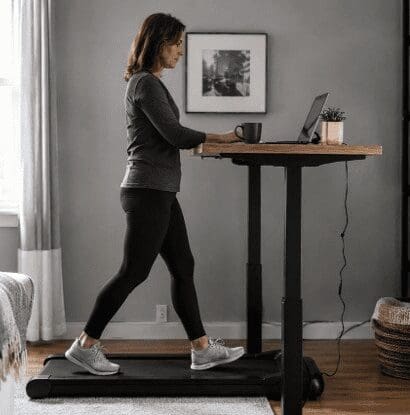
Treadmill desks are frequently touted as the ultimate solution to sedentary work. The message is clear, walk while you work, burn calories, and sit no more.
What works: Treadmill desks can be useful when used for short periods. Light walking can increase circulation, raise energy, and break up long periods of sitting.
What it doesn’t do well: Research shows treadmill desks are not for all-day use. Standing all day can be tiring. It can make it hard to focus, can create discomfort, and can strain your joints, particularly if your workstation is not set up correctly.
While walking you may also have more difficulty controlling your fine motor skills. This can make it difficult to do things such as typing or working with small parts.
The smarter way: Treadmill desks should supplement, not replace, your desk. Use them intermittently, perhaps 30 to 60 minutes at a time, while balancing with seated and standing work. Some people find them useful when attending an online meeting where you don’t need to type.
Balance Balls: Active, but Problematic
Active seating comes in many forms, but the best known is the exercise ball. The theory is simple: sit on an unstable surface and you work your core, improve your posture.
What works:
- Encourages some degree of muscle activation
- Promotes movement
The reality check: Using a balance ball for extended periods often creates more problems than it solves.
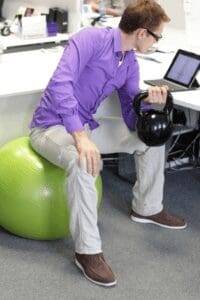
- Core Over-Activation – You don’t need to be turning on your core muscles all the time to have them be healthy and strong. Overdoing it can lead to fatigue and pain.
- No Back Support – Without a backrest, most users eventually slump. Instead of improving posture, they can reinforce poor habits, essentially “training” the body to sit incorrectly. This can actually make discomfort worse.
- Safety Hazards –
- Falling risk
- Some balls deflate or burst
- Balls rolling unexpectedly
- No Adjustability – Balance balls are not easily adjustable for height or ergonomic fit as is a proper chair.
- No Comfort Improvements – Research shows little to no comfort improvements by using a balance ball over standard seating.
The better solution: Use movement intentionally, not instability. Stand, stretch, and walk periodically for far greater benefits, without the risks.
Gaming Chairs: Not as Ergonomic as You Think
Gaming chairs are often marketed as ergonomic solutions, with flashy designs and extra cushions for support. While they can work for some individuals, they’re not universally beneficial.
What works: When you happen to fit a gaming chair, you can get enough support.
Common issues:
1. Lumbar Support Problems
Many gaming chairs fall into two categories:
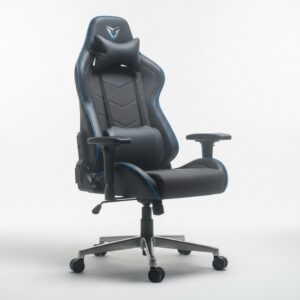
- Flat backs with little to no lumbar curve
- Overly thick cushions that exaggerate the spine’s curve
Both can lead to poor spinal alignment rather than supporting it.
2. Headrest
Headrests are meant to be comfortable but the padding on them tends to push your head forward, pulling your neck out of alignment and creating strain.
3. Lack of Adjustability
Unlike good task chairs, gaming chairs often don’t offer the level of adjustability you need for true ergonomic support.
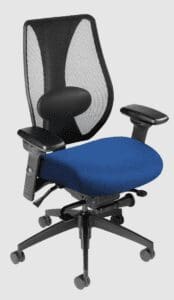
The safer bet instead of a gaming chairs is a good task chair that fits you well.
Look for:
- Adjustable seat height
- Good Lumbar Support
- Armrest adjustability
- Backrest that supports natural spinal curves
Kneeling Chairs: Can Feel Helpful at First, But Can Cause Problems Later
Kneeling chairs are designed to open the hip angle and encourage a more upright posture. Some people find them a nice change of pace from regular chairs.
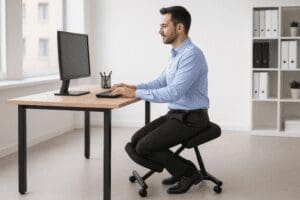
What’s good:
- Encourages a more open hip angle
- May help reduce slouching for some, at least for a while
The bad stuff: Kneeling chairs have some pretty major drawbacks:
- No backrest support
- More pressure on knees and shins
- Limited ability to move around
Over time this can get uncomfortable (especially for those with knee issues or circulation problems).
A better option instead of a kneeling chair is a saddle chair with a backrest
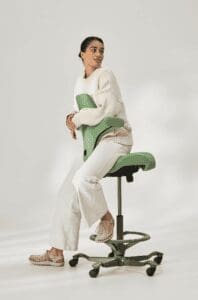
Saddle chairs have most of the benefits without the drawbacks. They:
- Can open up the hip angles naturally
- No pressure on the knees
- Allow freedom of leg movement
- Should have a backrest for support
One of the unique benefits is versatility: you can sit astride the saddle chair and lean forward against the backrest, which can help reduce lower back stress when leaning forward for tasks.
Bottom line: While kneeling chairs may feel good for a while, saddle chairs are a more balanced and sustainable option.
Why Movement Is Equally Important to Your Chair
The common denominator in all these options is this: none of them are panaceas. The best chair will not:
- Keep you comfortable for hours without a break
- Eliminate fatigue altogether
- Substitute the benefits of movement
Your body is designed to move, not stay locked in one position. Being on your feet or moving all the time is also problematic.
Healthy movement habits include:
- Standing or walking every 20–60 minutes
- Changing positions while seated
- Stretching throughout the day
- Alternating sitting and standing and moving frequently
When combined with a supportive chair, these habits create a much healthier and more sustainable work environment.
Related Blog: Busted! 5 Common Office Ergonomic Misconceptions
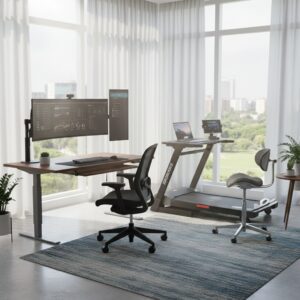
Build a Better Workstation
Why not build a workspace that encourages movement and stability, instead of just following trends?
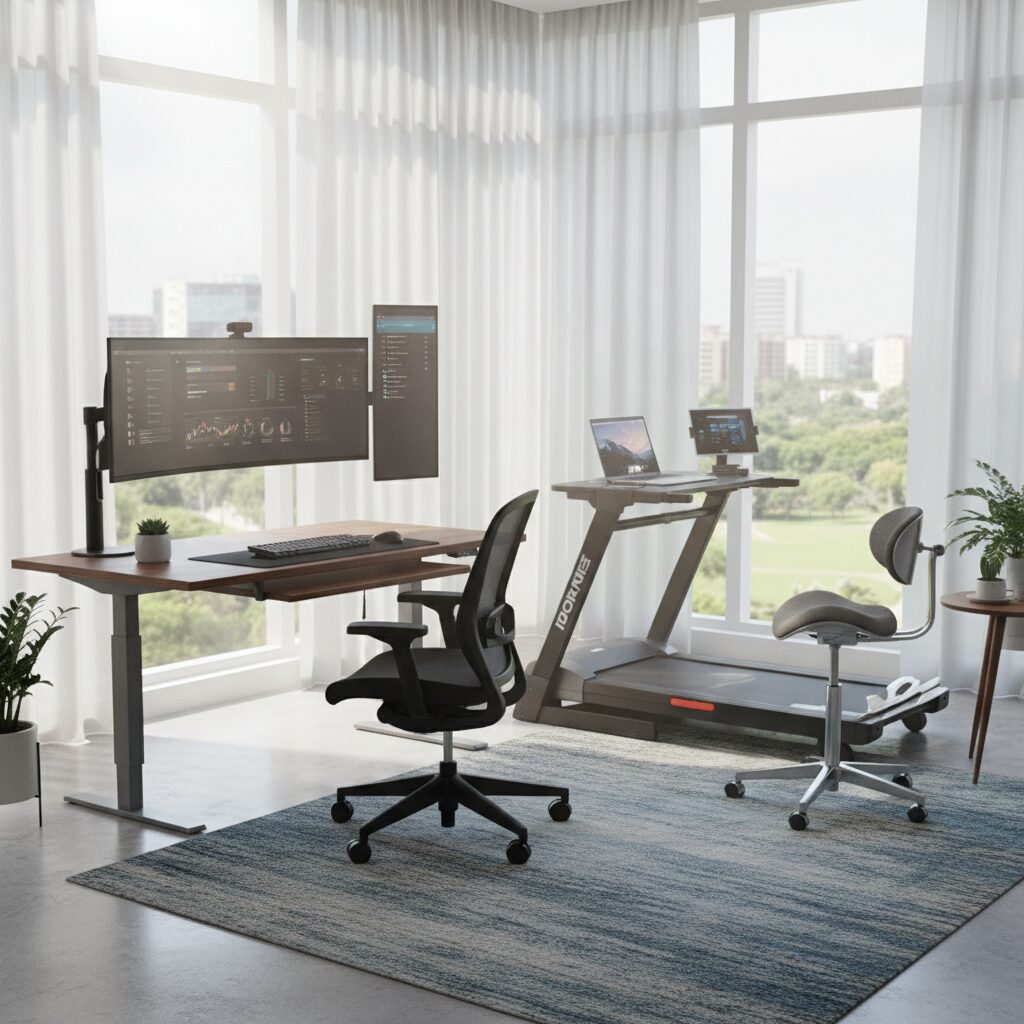
In a perfect world a complete setup would look like this:
- A good ergonomic task chair
- A saddle chair for variety, if feasible
- A sit-stand desk
- A treadmill desk for occasional use
This setup allows you to easily change positions, reducing strain and increasing comfort… But let’s be honest, no one can afford all of these.
Active Seating: Finding Balance, Not Extremes
Active seating can be helpful, but the purpose is often misunderstood. The idea is to find balance, not to replace sitting with nonstop motion of a treadmill or instability with a balance ball. We want to find a comfortable balance with both support and gentle movement.
- Treadmill desks can be ok, but only in moderation
- Kneeling chairs have their benefits, but also their problems
- Ball chairs add movement, but often at a cost
- Gaming chairs can work, but only when they really fit
The real secret to comfort and health isn’t a single product, it’s a combination of good ergonomics and regular movement. So, before you replace your chair with the latest craze, ask yourself a better question: Am I moving enough during my day? Because, in the end, the best “active seating” approach isn’t about the chair, it’s about how often you get out of it.
Contact us to schedule an “Ergonomic Equipment & Furniture Purchasing Consultation” or to schedule our “What To Aim For” webinar.
