
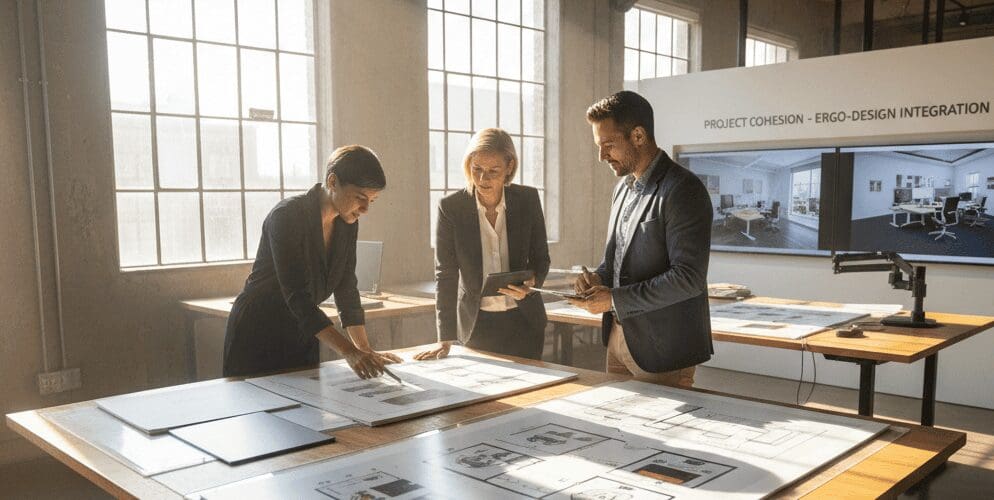
Prevention Through Design: Build Good-Looking Workplaces That Support Employee Well-Being
The first thing you notice in a workplace is usually how it looks. Design decisions influence employee satisfaction, their mood, and the overall perception of their work environment, whether a space is inviting or uncomfortable. But sometimes architects, designers and business owners get so caught up in the aesthetics that they forget how the design of the workplace and the choices of equipment can affect employees’ musculoskeletal health and everyday comfort.
A Prevention Through Design Case Study
Ergonomic Remodeling
At ErgoFit Consulting we use Prevention Through Design (PtD), a strategy which includes ergonomic principles in the planning of the workplace during the design phase of a project. According to the Center for Disease Control (CDC) when considered from the beginning, ergonomics can help organizations establish healthy working postures, improve workflow efficiency, reduce the risk of future injuries, and eliminate expensive retrofits post-installation.
Company A: The Price of an After-the-Fact Approach
Function before Form
One of our architecture clients did a major office renovation. The emphasis was on aesthetics. The ergonomic decisions were mainly based on the firm’s architectural expertise and the advice of the furniture vendor.
Sadly, within a matter of months of moving into the new space, over 50% of employees reported high levels of discomfort and dissatisfaction with their work environment.
Training Was Not Sufficient
Company A thought that the solution was to educate employees and contracted ErgoFit Consulting to provide training on workstation set-up. Employees were taught proper ergonomic practices but the training itself could not overcome the limitations of the workplace design itself.
ErgoFit Consulting was prompted to conduct a thorough evaluation to identify the root causes of employee discomfort and recommend solutions due to ongoing complaints.
Learn more about ErgoFit Consulting’s What to Aim For!© course.

Main Ergonomic Issues Encountered
Desks were pretty to look at, but they were…
- Too shallow
- Not adjustable in height
- Shared with multiple users
Monitors were placed on fixed arms that were:
- Not adjustable
- Placed too high
- Too close to the users
Overhead and natural lighting levels were:
- Too bright
- Producing excessive glare
- Creating visual discomfort for employees
These restrictions made it impossible for many employees to set up their workstations properly.
The Financial Impact
Company A identified ergonomic issues after implementation, which meant that solutions had to be retrofitted across the office, causing unanticipated costs and disruption.
Identified Ergonomic Issues
- Widespread employee discomfort and dissatisfaction
- Need for company-wide ergonomic retrofit recommendations
- Need for workstation adjustments across the organization
- Significant employee concerns before and after retrofit implementation
Retroactive Ergonomic Expenses
- Ergonomics assessment for 24 employees individually
- One-hour ergonomic workshop for 30 employees
- Ergonomic consulting services
- Employee training time
- Additional equipment purchases
- Facilities labor for workstation modifications
- HR time spent on complaint management and follow-up activities
Estimated Total Cost: $10, 000 – $15,000
Related Blog: Ergonomics and Wellness: Creating Healthier Workplaces
Company B: Integrating Ergonomics in the Design Process
Another Way
One of our technology clients, like Company A, wanted a workplace that was appealing and modern. However, during the workspace design and furniture selection phases, they recognized ergonomics as an important aspect of the project and worked with ErgoFit Consulting.
Ergonomics in All Choices
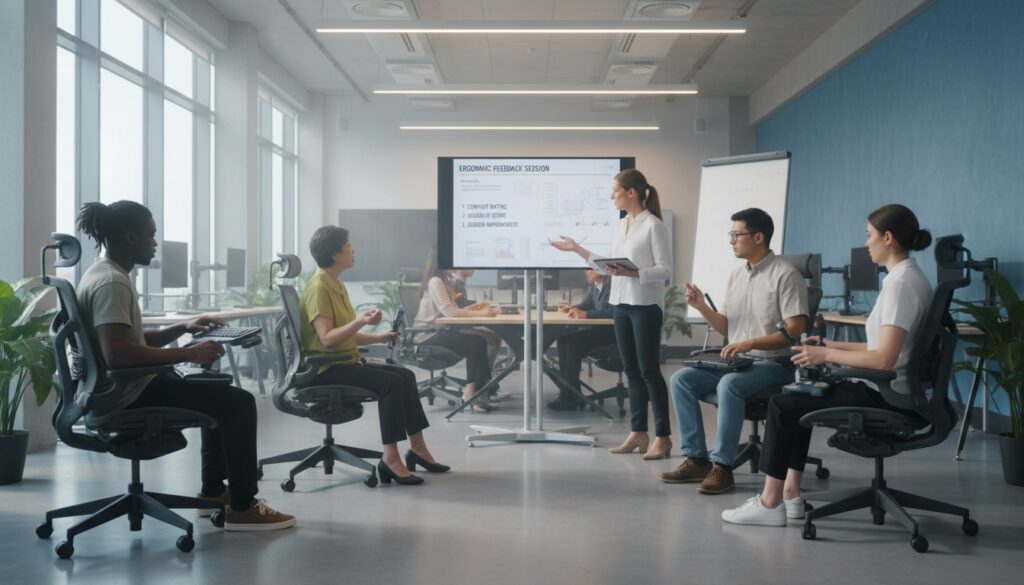
Company B leveraged ErgoFit Consulting’s equipment purchasing and design consultation process to:
- Find out which ergonomic features were most important for employee health and comfort
- Assess alternative equipment configurations that fulfill the organizational objectives.
- Find the best equipment solutions for their workforce
- Determine specific brands and models to test products
- Gather employee feedback with custom equipment evaluation tools
- Purchase decisions based on data and employee input
- Integrate practical employee suggestions into the final design
- Train staff on the distinction between evidence-based ergonomic solutions and workplace fads
- Train a member of the design committee through ErgoFit Consulting’s ergonomic screening program
- Provide all employees with electric sit-stand height adjustable desks
Positive results
Company B incorporated ergonomic expertise early in the project and realized the following benefits:
- Higher employee satisfaction with the new workspace.
- Improved employee comfort through thoughtful ergonomic design and equipment selection.
- Fewer requests for individual ergonomic evaluations following implementation.
- Reduced glare and visual strain through proper lighting design and placement.
- Workstations that accommodated a wide range of body sizes, preferences, and work styles.
- Greater employee confidence and acceptance throughout the workplace transition.
The Business Advantages
Active attention to ergonomics during the design phase delivered significant long-term benefits for Company B, including:
- Lower facilities labor costs when employees relocate or change workstations.
- Standardized ergonomic purchasing guidelines to support consistent equipment selection and procurement decisions.
- Minimal Human Resources involvement in post-implementation change management due to high levels of employee satisfaction and acceptance.
As a result, the organization experienced a reduced need for:
- Individual sit-stand desk assessments and recommendations.
- Special accommodations and workstation modifications.
- Footrests and other accessories used to compensate for height-related workstation issues.
- Keyboard tray installations and other ergonomic retrofits.
Total Cost of Ergonomic Prevention Through Design $3,125
The Lesson – Prioritize Ergonomics from the Start
The difference between Company A and Company B shows a simple fact:
It’s a lot cheaper to put ergonomics in during the design stage than to fix problems once the employees are in the space.
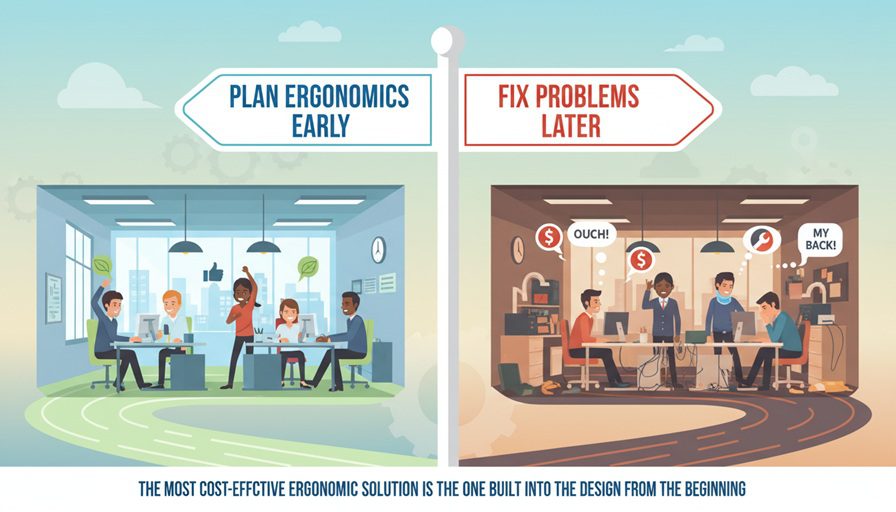
According to American Society of Safety Professionals (ASSP) organizations that use Prevention through Design by building ergonomics into the design of their work environments from the outset are able to create spaces that are attractive and that promote employee health, comfort, productivity and the long-term success of the business.
Are you renovating, relocating or building-out?
To achieve the best results, involve ergonomic expertise at least one year before any major reconfiguration, remodel, move, densification project, or new construction initiative. Early planning means healthier workplaces, happier employees and measurable cost savings.
Learn more about ErgoFit Consulting’s Ergonomic Facility Design Consultation.
Contact us to leverage the Ergonomic Facility Design Consultation or to arrange a What To Aim For!© training course.
